
How Do I Prepare for an Abdominal Ultrasound?
Ultrasounds create images of what’s happening inside your body by emitting sound waves. These non-invasive scans have been in use for decades, and an ultrasound is considered a safe way to obtain crucial medical information that can be used to diagnose various health issues.
The information that follows here explains why you may need an abdominal ultrasound, what to expect, and how to prepare for it.
Book Your Non-Invasive Scan.
What Is an Abdominal Ultrasound?
An ultrasound is a non-invasive scan that uses sound waves to view what’s happening in your body in real time. Abdominal ultrasounds provide clear views of multiple organs, blood vessels, and tissue in your abdomen.
Why Might a Doctor Recommend an Abdominal Ultrasound?
A common reason doctors recommend abdominal ultrasounds is to investigate unexplained abdominal pain.
Other reasons your doctor may recommend an abdominal ultrasound include:
- Abnormal results from a hepatic panel (liver blood test)
- Abnormal results from a kidney blood test
- Bloating or swelling
- Throbbing or pulsating sensation in your abdomen
Unexplained weight loss is another reason your doctor may recommend scheduling an abdominal ultrasound.
What Organs Can an Abdominal Ultrasound Examine?
Abdominal ultrasounds can provide detailed images of the following organs:
- Bladder
- Gallbladder
- Kidneys
- Liver
- Pancreas
- Spleen
Abdominal ultrasounds also provide images of blood vessels in your abdomen.
What Conditions Can an Abdominal Ultrasound Help Detect?
Abdominal ultrasounds can be used to diagnose the following:
- Abdominal aortic aneurysm
- Bladder stones
- Enlarged spleen
- Fatty liver disease
- Gallbladder inflammation
- Gallstones
- Kidney disease
- Kidney stones
- Liver disease
- Pancreatitis
Abdominal ultrasounds can also identify cysts or tumors and indications of various types of cancer, such as liver, kidney, and pancreatic cancer.
Do You Need to Fast Before an Abdominal Ultrasound?
You’ll receive instructions on how to prepare for an abdominal ultrasound when you schedule it. There may be specific instructions that vary based on the reason for your exam.
How Many Hours Should You Avoid Eating Before the Test?
You’ll likely need to fast for between six and 12 hours prior to your exam.
Can You Drink Water Before an Abdominal Ultrasound?
For most abdominal ultrasounds, you can drink small amounts of water before your abdominal ultrasound.
What Foods or Drinks Should You Avoid Before the Test?
In most cases, you should not eat or drink anything but small amounts of water before your ultrasound. You may also be asked to adhere to a low-fat diet the night before your exam.
Can You Drink Coffee Before an Abdominal Ultrasound?
You cannot drink coffee before your ultrasound. Drinking coffee can cause intestinal gas, which can interfere with the sound waves and prevent the ultrasound from capturing clear images.
Can You Chew Gum or Smoke Before the Exam?
You cannot chew gum or smoke before an ultrasound because, like coffee, chewing gum and smoking can cause intestinal gas.
Can You Take Medications Before the Exam?
Most medications can be taken with a small amount of water. You can ask when scheduling your exam to ensure you have clear instructions.
What Happens During an Abdominal Ultrasound?
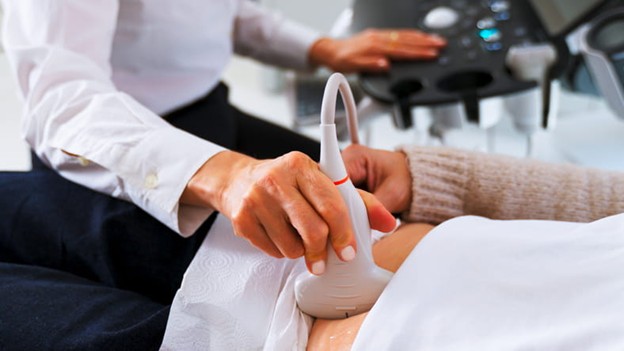
You’ll lie flat on an examination table during the ultrasound. At Preventative Diagnostic Center, an American Registry for Diagnostic Medical Sonography (ARDMS) registered technician will apply gel to your abdomen. They will then place a transducer (wand) on your skin and move it over the abdomen to capture images.
If you are also receiving a thyroid ultrasound, the above will be done to your neck as well.
How Long Does an Abdominal Ultrasound Take?
Abdominal ultrasounds typically take approximately 30 minutes. At Preventative Diagnostic Center, we bundle thyroid and abdominal ultrasounds, saving patients time and money. Since you’re receiving two ultrasounds at once, it may take up to an hour to complete the scans. You can confirm how much time to set aside when you contact us to schedule your appointment.
Does an Abdominal Ultrasound Hurt?
Ultrasounds don’t hurt, but you may experience minor discomfort. For example, you will need to lie still during the exam, which can be uncomfortable for some people. Some people also feel discomfort when the cool gel is applied to their abdomen. Lastly, pressure from the transducer may cause discomfort, particularly if you’re experiencing abdominal pain or if it presses against an inflamed area.
What Should You Wear to the Appointment?
You should wear comfortable clothes to your ultrasound appointment. We require you to avoid wearing shirts with metal buttons.
What Happens After the Ultrasound?
Individuals who have diagnostic ultrasounds should be able to eat, drink, and return to work or resume other normal activities after their exam.
When Preventative Diagnostic Center performs your ultrasounds, you’ll receive a report with your results by mail or email. The report typically arrives within 10 days.
Where Can You Schedule an Abdominal Ultrasound in Las Vegas?
When you book an abdominal ultrasound at Preventative Diagnostic Center, you can count on prompt, detailed medical information. We provide peace of mind for those scheduling ultrasounds as part of their preventative care regimen or to investigate symptoms, such as unexplained abdominal pain or weight loss.